태양광발전 설치 방향 다양화를 통한 배전계통 수용성 해법
Enhancing Distribution Network Hosting Capacity through Diversified PV Installation Orientations
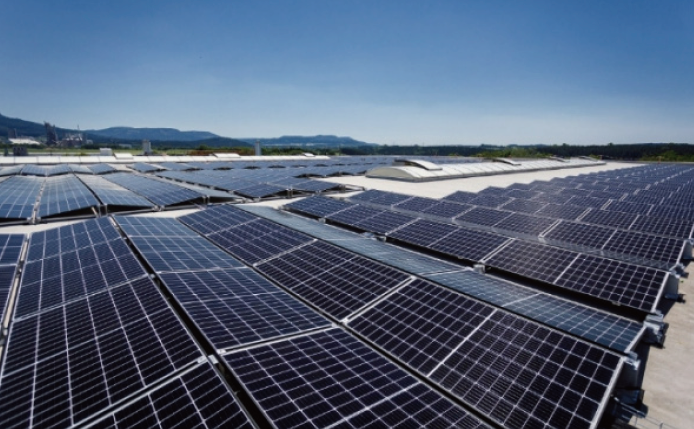
한화솔루션의 미국 조지아주 태양광 발전 시설
출처 한화
문원식 | 숭실대학교 전기공학부 교수
Wonsik Moon | Department of Electrical Engineering, Soongsil University
요약
국내 태양광발전은 대부분 남향 설치를 통해 발전량 극대화를 추구하지만, 정오(12시 전후)에 출력이 집중되면서 배전계통의 전압 상승과 선로 제약 등 수용성 한계 가 발생한다. 양면 모듈 도입으로 출력이 더욱 증가하면서 이러한 문제는 심화되고 있다. 본 기고문에서는 동서향 및 수직형 양면 태양광의 출력 분산 효과를 분석하고, 이를 통해 배전계통의 호스팅 용량을 약 40% 향상시킬 수 있음을 시뮬레이션과 실증 연구를 통해 확인하였다. 또한 스위스 댐 벽면, 미국 농장 울타리 사례를 통해 다 양한 입지 활용 가능성을 제시하고, 국내에서도 농지 경계와 도로 방음벽 등 유휴 공간을 활용한 펜스형 태양광 도입을 검토할 필요가 있음을 강조한다. 아울러 12시 피크 회피를 유도하는 계통 연계 제도와 설치 방향 다양화에 대한 정책적 지원이 병행될 때, 재생에너지 확대와 계통 안정화를 동시에 달성할 수 있을 것으로 기대된다.
Abstract
In Korea, most photovoltaic (PV) systems are installed south-facing to maximize energy yield, but this orientation concentrates generation around noon (12–1 PM), causing overvoltage, reverse power flow, and thermal constraints in distribution networks. With the adoption of bifacial modules further increasing output, these challenges have intensified. This article analyzes the outputsmoothing effects of east-west oriented and vertical bifacial PV installations and demonstrates, through simulation and field data, that distribution network hosting capacity can be improved by about 40%. Case studies from Switzerland’s dam walls and fencetype PV along U.S. vineyards illustrate the potential of utilizing idle spaces for vertical PV deployment. For Korea, similar applications on farm boundaries, roadside barriers, and other urban infrastructures could be promising. Policy measures that incentivize off-noon generation and encourage installation diversity will be essential to achieve both renewable energy expansion and distribution system stability.

(06130) 서울시 강남구 테헤란로7길 22(역삼1동 635-4) 과학기술회관 1관 901호
사업자등록번호 : 220-82-01690 / 대표 : 박종배
COPYRIGHT ⓒ KIEE ALL RIGHTS RESERVED.