





KIEE PES North America Chapter & KIEE Study Committee on Distributed Power Grid
Joint Webinar Announcement
Presenter:
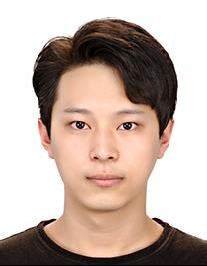
• Min-Seung Ko, The University of Texas at Austin
Title:
• Analysis and Mitigation of AI Datacenter-Induced Wide-Area Grid Oscillation
Date & Time:
• April 17, 2026 (Friday) 10:00 – 11:30 A.M. (KST)
• April 16, 2026 (Thursday) 8:00 – 9:30 P.M. (CDT)
Host:
• KIEE PES North America Chapter, KIEE Study Committee on Distributed Power Grid
Zoom Link:
https://us06web.zoom.us/j/82164209367?pwd=PBLK3oDtishy41kghMRaNYBCea7xEi.1
• Meeting ID: 821 6420 9367
• Passcode: 056166
Abstract
The rapid expansion of AI datacenters, particularly those supporting generative AI and LLM training, is introducing unprecedented load characteristics to modern power systems.
These AI datacenters show fundamentally different behaviors from conventional industrial loads, raising new concerns for grid planning, stability, and operational reliability. This talk introduces the modeling, grid and stability impacts, and interconnection requirements of emerging AI-driven loads. In particular, the presentation examines how workload-driven power fluctuations can induce local and inter-area oscillatory responses, depending on various datacenter- and grid-level characteristics. Specifically, the impact of geographical location, fluctuation frequency, and modal characteristics of grid will be analyzed in detail. As an effective mitigation approach, power smoothing through co-located hybrid energy storage systems (HESS) will also be discussed. Based on the coordinated control design of ESS and supercapacitor, HESS enables the suppression of load and frequency fluctuations, helping the stable integration of large loads.
Speaker Bio
Min-Seung Ko received the B.S. and Ph.D. degrees in electrical engineering from Yonsei University, Seoul, South Korea, in 2018 and 2024, respectively. He is currently a postdoctoral fellow with the Chandra Family Department of ECE at University of Texas at Austin, Austin, TX, USA. He also serves as the secretary of IEEE PES datacenter and AI load integration (DALI) task force. In 2024, he was a senior researcher with the Net-Zero Laboratory, Gwangmyung, South Korea. His current research interests include data-driven planning and operation of IBR-dominant power systems, stochastic stability analysis, and seamless integration of large load.
많은 관심과 참여 부탁드립니다.







(06130) 서울시 강남구 테헤란로7길 22(역삼1동 635-4) 과학기술회관 1관 901호
사업자등록번호 : 220-82-01690 / 대표 : 박종배 / 연락처 : 02-553-0151~7
COPYRIGHT ⓒ KIEE ALL RIGHTS RESERVED.